An everything-including-the-kitchen-sink kind of blog. This includes stuff I'm interested in, reviews of stuff I did, and the grade I'd give to humanity today.
Showing posts with label the robin hood obsession. Show all posts
Showing posts with label the robin hood obsession. Show all posts
Alright this past weekend I saw a pretty cool show at my university, "The Heart of Robin Hood." Now this wasn't an entirely perfect production, but there were a lot of really cool things about it. Plus it's just nice to see a show about my obsessions haha.
The good things included the scenic design being really cool. It was in a forest with a ton of ramps, and they had an alcove in the back for a band to play during the show. It also was just a fun production with a lot of funny aspects and some camp. There was this one character, Pierre, who was very funny and constantly broke the fourth wall. In the end, he wraps up the play saying that this show is about how he found his heart, meaning that he found kids that he ends up adopting. Which is really sweet!
The play suffered though from what I think a lot of Robin Hood media suffers from which is that it didn't know what tone it was going with. There was so much camp and silly things, especially in the second half. But the first half involved one man getting beheaded, another losing a tongue really bloodily, and a person being hanged and physically hanging there. Which does not match up. It's a common issue though, I think a lot of people want to make this an intense story about good and evil, but also the villains are comically incompetent and there's anachronisms throw around to be self-aware. And you can't really have both.
The other thing I want to mention is that the play was interesting because it mostly was about Marion, and her dressing as a boy and going into the woods as Martin, who is the idealized Robin Hood. But while that's cool and all, the play is still "The Heart of Robin Hood." I guess we shouldn't mistake who the original legend is about!
But still it was such a fun time, and it kind of was about storytelling and nature which is rad. I had a lot of fun.
I finally popped open my Steam account and downloaded the sequel to "Arcade Spirits" that I've been waiting for all this time. I am not very far into it, but I already adore the game!
One great improvement over the original is the amount of customization. You can pick your name, nickname, pronouns (from many options), body type, clothing, and you even get to design your rival! It's really cool especially to see all of the pronoun options, there's the typical he, she, they, but also many more like fae, ze, it, etc. What great queer representation!
Then there's the characters. These have always been the strength of visual novels like these. I immediately fell in love with Grace, a wonderful Black lady scientist. She just resonates with me so much as a fellow scientist. Then there's Locksley, who was clearly inspired by Robin Hood. Robin Hood in the legends is originally from Locksley, plus the character wears a green hoodie and is a rogue game repairer who values justice and fairness. I'm obsessed. Plus there's a super cool disabled character, Jynx, who I also love. And others, but those are the main ones so far.
I'm so excited to see how the story unfolds and how the game mechanics come to life like the original. Here we go!
Okay so I have now seen both “Robin of Sherwood” (a British tv show from the 80s) and “Robin Hood BBC” (also British, from 2000s). The two shows are very similar, and not just because they’re both about our favorite bow-and-arrow wielding outlaw or because they both got cancelled after 3 seasons.
In this post I’m going to try and convince you that watching “Robin of Sherwood” is definitely worth your time if you’ve seen “Robin Hood BBC,” and then below the cut I’m going to continue the comparison but with spoilers for both shows. Let’s have at it!
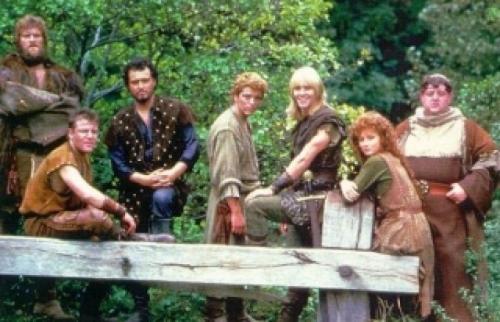
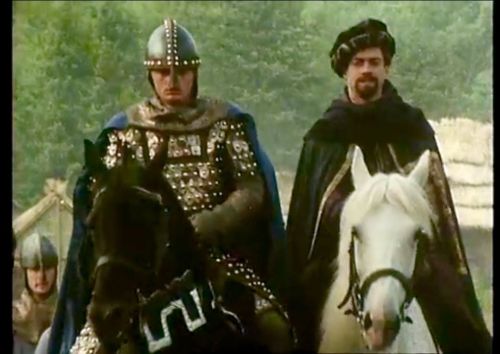
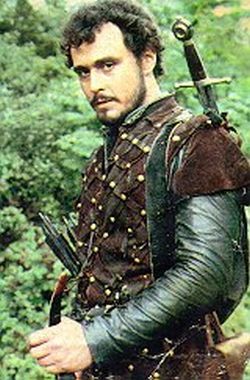
“Robin of Sherwood” season 3 cast
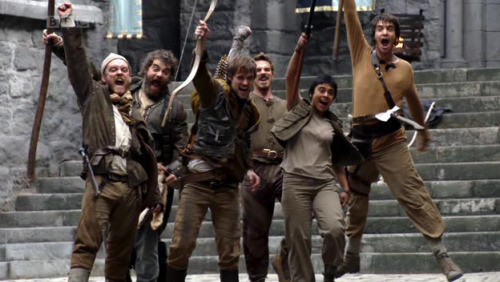
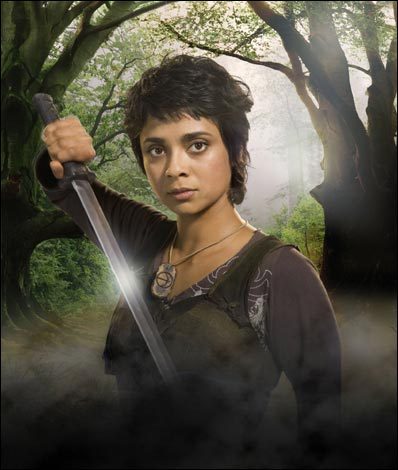
“Robin Hood BBC” season 1 cast
The biggest reason that I’ve got for watching both shows is that they both take the same approach to the characters in Robin Hood’s gang. Both are small groups (I think both shows make the same joke about there being 5-7 in the gang) which allows for plenty of focus on their individual interactions. Most Robin Hood movies show just about hundreds of men and only introduce you to a couple of them, but both of these shows go in depth to the 6 or so characters they create. It’s a wonderful change of pace.
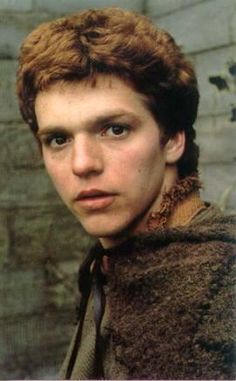
“Robin of Sherwood” Much
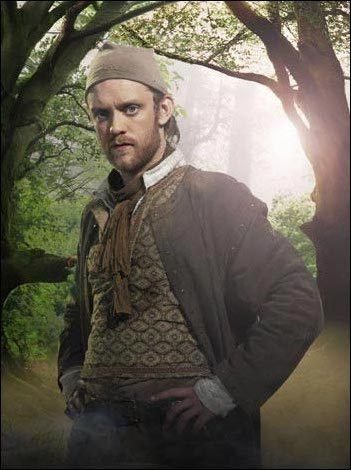
“Robin Hood BBC” Much
Beyond that, the characterizations of the outlaws are rather similar. There is no way that “Robin Hood BBC” didn’t take some ideas from “Robin of Sherwood” which I’m going to get into more under the cut. But I think the best example of this is with Much. Your typical Robin Hood adaptation doesn’t have any particular connection between Much and Robin, usually Much is just kinda around or something. Both of these shows make Much and Robin very close. With “Robin of Sherwood” they are adoptive brothers as Robin was raised by the miller after his father’s death. In “Robin Hood BBC” Much is Robin’s loyal servant who went with him to the Holy Land and back. Either version expands Much more than is typically done (pun only a little intended heehee).
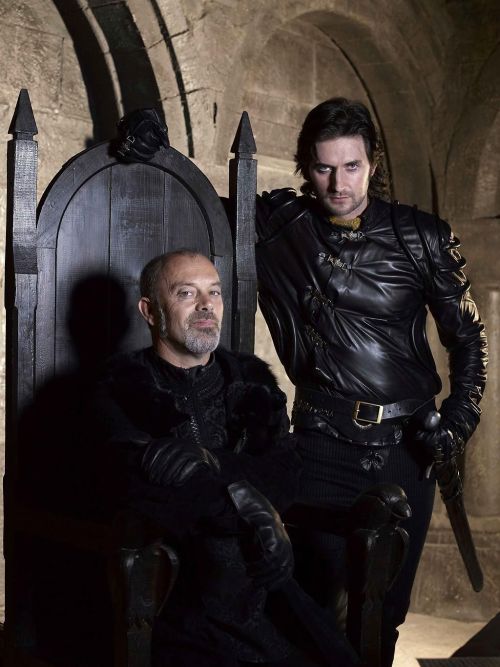
“Robin of Sherwood” Sir Guy and the Sheriff
“Robin Hood BBC” the Sheriff and Sir Guy
Then there’s the Sheriff of Nottingham and Sir Guy. I’ll be honest, I think “Robin of Sherwood” wins for the gayest of the two. There are scenes where the two are literally in tubs next to each other, or the Sheriff giving Guy orders from the tub. There’s even an instance where the Sheriff makes Sir Guy dry him off after a bath! In “Robin Hood BBC” the Sheriff definitely harasses Guy, but not to the same extent, probably because of the GuyxMarian love triangle they were going for. It’s freaking hilarious to see what happens to their relationship as soon as that disappears though!
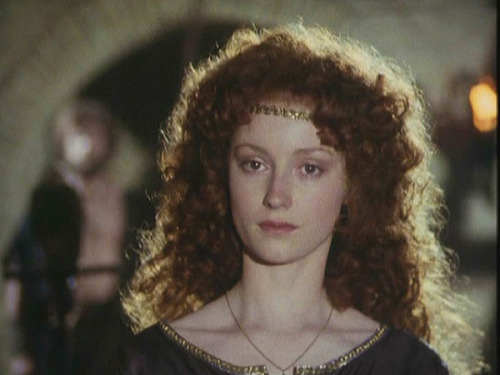
“Robin of Sherwood” Marian
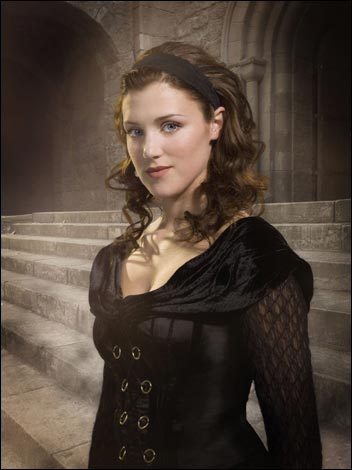
“Robin Hood BBC” Marian
And I’d be remiss if I didn’t talk about Marian. I adore the Marian in “Robin Hood BBC” and the fact that she is a vigilante in her own right. But the thing that frustrates me SO MUCH about her character is that she never truly leaves the castle to join Robin Hood in the woods. “Robin of Sherwood” skips all that BS, Marian spends the bulk of the show out in the woods with the outlaws and it’s awesome. She’s a total badass, and the best part (to me) is that the love triangle isn’t a thing! So no Guy creeping around her (he creeps around other ladies)! Both shows present an excellent version of Marian and they compliment each other super well.
“Robin of Sherwood” Nasir
“Robin Hood BBC” Djaq
Finally I want to talk about the inclusion of a Saracen in the gang of outlaws. In “Robin Hood BBC” that’s Djaq, the incredibly clever and strong Saracen lady who is taken over as a slave and then joins the gang. But the thing is that Djaq would not exist if it weren’t for Nasir, the Saracen from “Robin of Sherwood.” This show was the first instance of a Saracen joining the gang. Basically he clicked really well with the cast, and didn’t look too bad either, so they kept him around for the rest of the show. And now almost every Robin Hood adaptation has a Saracen included in the group of outlaws as well, it’s such a cool example of how this myth is still growing and changing even in the present day. So if you’re a Djaq fan (and you better be) you should definitely check out Nasir because he’s the reason she exists.
One last point about the shows in general before I hide the rest. A major complaint about “Robin Hood BBC” is how it really isn’t that historically accurate. The show just didn’t have the budget for it, so they made do with what they could. The result is… entertaining at the least. “Robin of Sherwood” is the opposite where the writers made a point to try and make it as true to history as they could. So costumes and props are all accurate, and actual events that happened during the 12th century are peppered throughout. The result is a beautiful version of what “Robin Hood BBC” could have been with a little more money.
Alright, plot comparisons and spoilers below. You have been warned. I hope though that if you’ve only seen one of these shows that I have convinced you to check out the other!
There are numerous similarities between the plots of both shows. I’ve said it before and I’ll say it again: “Robin Hood BBC” definitely took several of their ideas directly from “Robin of Sherwood” and you cannot convince me otherwise. Lack of images due to a lack of decent screencaps, but you’ve probably seen the episodes already.
Let’s start with the season 1 finale. I’ll go over “Robin of Sherwood” first and then “Robin Hood BBC.” In “Robin of Sherwood” King Richard returns to England, befriends Robin Hood, and pardons the outlaws. He even tries to make Robin part of his court. By the end Robin bails because he doesn’t want to be the king’s pawn, Marian gets shot as they run away, but is miraculously brought back to life! In “Robin Hood BBC” they get news that the king is returning to England which means that Marian must now marry Sir Guy. She decides to rob him first, leading to her getting stabbed and nearly dying. Somehow she miraculously survives. They expose the king to be a fraud, stop the wedding, and save the day! The similarities are obvious, both involve King Richard returning to England (which is then revealed to be not as great as the characters initially thought) and Marian dying and then coming back to life. Now you would be correct to point out that a Robin Hood story only has so many big cards to pull for an emotional season finale, and naturally two of them are the king returning and the audience’s love of Marian. But this is basically the same plot at the same point in both of the shows, you can’t tell me that that’s just a coincidence.
Moving on to the emotional wreckage that are the season 2 finales. “Robin of Sherwood” ends season 2 by killing off Robin Hood himself. The actor wanted to move on to other projects, so they killed him off in an emotional standoff. “Robin Hood BBC” ends it’s season 2 by Guy killing Marian who was trying to protect the king. It’s also brutal and emotional and horrible ugh thanks guys. Alright so they both decide to go balls to the wall and kill off a major character. To be honest, I think that there’s less ripping off going on here, “Robin of Sherwood” did this out of necessity to let the actor leave while “Robin Hood BBC” I think did it for more plot-related reasons. But it is still a fascinating parallel, and how “Robin of Sherwood” handled the title character leaving I think is much more interesting.
So “Robin of Sherwood” decided to keep the show going by turning the figure of Robin Hood into a legacy character. Another man takes his place as the outlaw hero. (Sidenote: this also means that they can resolve the conflicting theories about how Robin could be either a common man or a noble, and similarly how he has connections to both Locksley and Huntingdon. The first Robin in a commoner from Locksley and the second is the Earl of Huntingdon’s son. It’s really quite elegant.) And that is definitely what they planned on doing at the end of season 3 of “Robin Hood BBC.” Again, the actor wanted to leave and do something else so they had to kill him off. But they set up Archer as the next man to be in charge of the gang. I’m a real big fan of not giving “Robin Hood BBC” a season 4 since season 3 sucked soooo bad, but I’m almost certain that it would have played out similarly to season 3 of “Robin of Sherwood” when they have to pass that mantle onto a different actor as well. Additionally, I think both shows have a scene where Robin points to members of the gang and says that if he were to die, they would all carry on without him (”you are Robin Hood! and you are Robin Hood!”) so the idea that this is about more than one man is present in both. It’s a cool theme for both shows.
Finally one last point that is unrelated to a season finale. Both shows reveal at some point that Robin Hood and Sir Guy are related. They are half-brothers in “Robin of Sherwood” and they share a half-brother in “Robin Hood BBC.” Quite honestly I find this hilarious, mainly because it’s handled so poorly in “Robin Hood BBC.” But if you watch the “Robin of Sherwood” episode, there’s a subplot where Will and Much think they’ve come into contact with leprosy. And in the “Robin Hood BBC” version Guy’s father is a leper. It’s like the BBC writers only understood half of the original episode and then wrote “Bad Blood!”
Feel free to hmu if you’ve seen both shows and want to add to this list! I love discussing different adaptations of stories.
I picked up this book at the used bookstore in Detroit! It’s
a quick read, just under a hundred pages. But boy is it a time. Harris here is
trying to debunk the theories claiming that Robin Hood is nothing more than a
myth or legend, primarily because the evidence suggesting this is lacking, and
put forward his own theory that there was a real outlaw.
But first some background is in order. I tried to do some
digging on this book, to see how reliable it is, and surprisingly I couldn’t
find much. There isn’t a publication date in the book, but I managed to find
some information off of the internet indicating that it was published around
the 1950s-1970s. So it could be over 50 years old, I have no real way of
knowing.
Related to that, I tried to find some reviews or critiques
of the book to indicate whether or not Harris’s theories have been challenged
or updated in any way. I could find literally nothing. I have no idea whether
his ideas or accepted by the historian community or dismissed. And I am no
expert on this subject, so take this all with a heavy grain of salt.
The book can be divided into roughly three parts. The first
goes over the primary sources that we have about Robin Hood, as in the legends
and ballads. The earliest known one is called the Lytell Geste and this
is what Harris refers to again and again. Many changes have been made since
there (primarily the addition of Maid Marian and Friar Tuck) so the original
stories aren’t super familiar to contemporary audiences. Harris goes through
them, as well as inferior ballads as well to sum up the evidence that we have.
The second part consists of Harris tearing down other
historians’ theories of Robin Hood’s existence. This is honestly quite funny in
places, as Harris seems to tire of coming up against the same incorrect ideas
repeatedly. There are also points where he takes shots at their researching
ability; I sense some animosity going on here… Regardless, the bulk of the book
is dedicated to this section as Harris’s thesis is that you cannot prove that
Robin Hood is a myth, therefore you cannot eliminate the possibility that he
was real. Probably his most salient point towards this is that “Robin Hood,” or
some variation thereof, was very common in medieval times and you would think
that a legend would have a more unique name!
The third part is the shortest and consists of Harris’s own
investigations in the legendary outlaw and his personal theory. Naturally, he
thinks that he existed. Harris pins down several names mentioned in the Lytell
Geste and evidence to suggest that the king at the time was King Edward II,
known for associating with lower-class citizens and pardoning some. His
personal idea is that Robin Hood was a small-time outlaw with a reputation for
being an excellent archer and very kind to those whose paths he crosses. Over
time, the story grew and changed, being associated with a variety of places and
time periods. But originally there was an outlaw who started it all.
Knowing very little of the research, I thought this was a
fascinating read. Obviously I wish it was a little longer; it is very short at
only 100 pages. And I do wish that we heard more about Harris’s theory of the
real-life Robin Hood, but since there is scant evidence and he focuses mainly
on debunking others it is understandable that the focus is elsewhere. There are
many things I would give to know how this information has been updated over the
years, but until I find a book with a more recent publishing date, guess we
will have to wait.
So having seen that new Robin Hood movie, all I wanted to do was go back and watch some decent Robin Hood content. And the 2006 Robin Hood tv series is still one of my favorites.
I've posted about this show previously. But this is my first time revisiting it in years. My favorite part is still seeing a smaller band of Merry Men and getting to know all of their different personalities. Sir Guy has not aged well for me, the fact that he's an abusive sadist really turns me off, despite Richard Armitage looking fine as hell. And somehow the Sheriff is one of my favorites, mostly due to Keith Allen's tendency to chew the scenery and just go balls to the wall with the role haha.
Man, I wish we had some content like that again. I miss it so much, and it's over a decade old now. It makes me feel ancient.
It's been a while since I've posted about any Robin Hood media on here and I think I should fix that. The 2018 movie, directed by Otto Bathurst and starring Taron Egerton, was supposed to form a franchise to rival Marvel movies and all that. Unfortunately, it falls super flat. And I'm a Robin Hood obsessive nut.
The plot is very standard, Robin goes to the Crusades, is sent home for sympathizing with the natives, and finds the Sheriff abusing his people. He is convinced by a man who followed him home from the war (he goes by "John" as in John, Little) to take up arms against the Sheriff and undermine his authority after hearing that Marian is now with a certain Will Scarlet. Hi-jinks ensue, and it ends with Robin getting Marian back, evacuating the people of Nottingham, and Will being made the new Sheriff after the old one gets killed.
Honestly my biggest problem with it is that it tries to say too much about the current political climate. Clearly there are parallels between the Crusades and the modern Middle East, but the scenes with Robin fighting in the Holy Land don't look medieval at all. Arrows apparently go off automatically, and explode everything around them like guns. And then he returns and doesn't seem to care too much about politics, until John forces him to. Which triggers a couple of dramatic speeches that seem out of character.
Then there's the characters. Robin, to his credit, hits a nice note of always enjoying stealing from the rich. What I'm confused about is why John followed this mess all the way back to England to just take revenge on one town that he didn't have much to do with. The switcheroo involving Will becoming the Sheriff just because his girlfriend broke up with him also confuses me as he was for the people right up until that moment. My biggest problem though is with this training montage where John teaches Robin how to fight once he's in England which makes zero sense as he just spent a couple of years fighting in the Crusades which I'm sure trained him to fight.
So it isn't a great movie. I still found it fun, but that's just me. I'm consistently amazed at how modern Robin Hood movies try to set up a series only to fall flat when all I want is a franchise I can enjoy. Maybe someday it'll come.
Finally finished the series. All I really want in life is to
run off to Robin Hood’s gang and fight evil with them.
I quite liked this ending. It involves Friar Tuck a lot,
often asking for peace. Which is really an idea that you wouldn’t expect here,
since the Middle Ages were not known for being very peaceful. Tuck is a very
unconventional Friar, but I expect that makes him endearing to contemporary audiences.
I know that I quite liked him.
Allan a’Dale also finally makes an appearance (Much is absent
though, even though his character is mentioned in a song). He is a singer, of
course, the traditional image of the outlaw. He can also speak several languages.
That’s one of the good things about this series, the languages are pretty
accurate, as far as I can tell. Sure it’s modern French, but I’m willing to
give some leeway.
One of the cool aspects of this book, as opposed to the
others, is that each part is preceded by a snippet of a ballad about Rhibran.
This snippet is part of the larger trilogy, but it also reflects what’s
happening in the novel as well. Which is quite interesting. This is where Much
is mentioned, even though he never appears.
Of course, the book ends with Thomas a’Dale, Allan’s
grandson (not sure if the timing of the generations is correct, but whatever),
adapting the story of Rhibran to Sherwood and King John. Which is the legend as
it is more commonly known. I liked it, the whole Robin becoming a legend thing
is used a lot in portrayals, but it is a major part of the story. The process
of the tale being immortalized is just as big as the story itself.
Overall, I thought that this was a great series. There isn’t
enough contemporary stories of Robin Hood, it’s mostly children’s books. Need
more books like this in my life!
Just finished Scarlet
this morning (it took me a while because public libraries are pretty
unreliable, but here we go).
My main problem is the fact that this novel is mostly
narrated in the first person from Will Scarlet’s point of view. And he has a
pretty irritating dialect, of course. I’m not sure whether I got used to it or
not, but it did fade a bit over time. So that takes some getting used to.
There’s also this one point at the end where he picks up a
kid with a broken hand. That sure healed up quick.
There’s also the introduction of the Sheriff and more Guy in
this book. Merian also joins the gang, so you can see the legend coming
together over time. And in Welsh, King Raven’s name is Rhi Bran y Hud. Say that
ten times fast and you’ll see where I’m going with this. (It’s pretty clever
really, I wonder how many names the author went through before he hit on that?)
Other than that, pretty solid continuation of what was
started in Hood (hence why I don't have much to say about it). But sequels are
never as good as the original.
So this is one of my favorite adaptations of Robin Hood. My
personal story with how I got into it is a little strange too, but I’ll tell
that at the end.
This is a 3 season series, the first two are good and the
last sucks. It starts off with Robin, Earl of Huntingdon and Lord of Locksley,
returning from the crusade in the Hold Land (where he was in King Richard’s
private guard) with his servant Much. Once he has returned to Locksley, he
finds out that Guy of Guisbourne has taken over his lands, and a new sheriff is
bullying the people. So he becomes an outlaw, and along with his men Much,
Allan a Dale, Will Scarlett, John Little, and Djaq he robs the rich and helps
the poor. John was actually in the forest already, he ambushed their camp and
that’s how they met. Djaq is a Saracen girl who joins them a little later.
Marian is the daughter of the old sheriff, and also doubles as the
Nightwatchman, who has been helping the poor since Robin left.
Season 2 introduces the Black Knights, a group of nobles who
want to kill the king. Of course, Robin and co do everything they can to stop
them. Allan also becomes a spy for Guisbourne, which brings dissent into the
outlaw’s ranks.
Season 3 is where everything falls to shit, basically. A few
characters leave, so Tuck, Kate, and Isabella are introduced. Tuck is a warrior
monk who believes in the legend of Robin Hood a little too much, Kate is a whiny
little bitch, and Isabella is the vengeful ex. Yeah don’t expect too much.
As far as the legends go, I’m really glad that they kept
most of the bare facts like the place names (there’s even a Kirklee’s Abbey,
where Robin supposedly died) and Robin’s original title, Earl of Huntingdon. And
a few of the old legends are adapted, for example, the archery contest (as
usual). And Little John remains a sort of rival to Robin at the beginning. Much
is given a very large role, as Robin’s servant he is usually the right-hand
man. Allan is usually a minstrel, here he is just a sneaky guy. Will Scarlett
doesn’t actually wear scarlet, it’s just his last name. And the addition of
Djaq is a great touch. The later appearing Tuck is a historically accurate
monk, they didn’t have friars back then. There are a bunch of modernizations,
especially in the lingo, but I never go in expecting this to be historically
accurate. Because these people are going to screw up.
What I really like about this series is that Robin’s gang is
a small, manageable group. You don’t have swarms of men, just around six. This
allows you to get to know them all really well, and there aren’t any ridiculous
ambushes where the guards are outnumbered 10 to 1. And the characters are all
really well done (excluding S3). There is a love triangle between Djaq, Will,
and Allan and what’s great about this one is the subtly of it. The way the
three of them interact doesn’t make it obvious, but that’s the way that I
prefer it. The writing is actually pretty decent, once again, up until S3. Then
you want to shoot everyone involved.
The way I got into this series is by stumbling across the
third season on TV. (I know, I know, why am I insulting it so much then?) I had
no idea what was going on or why, but I knew it was Robin Hood and therefore
was hooked. It ended after the third season, and then a few years ago I watched
the first two. I have been rewatching the series every summer since then. And I
have also realized just how shit the last season is.
So this is a good series, for what it’s worth. I’ve been in
love with it for years. It was way too short for me.
So I have been looking for the novel Hood for years and could never find it anywhere (I have a problem,
I’m aware of it) (also bookstores must have a problem if I couldn’t find this
anywhere). I recently finished it, and it’s pretty different from any other
adaptation of Robin Hood that I’ve read.
Obviously, the whole thing is not in Sherwood Forest, but in
Wales. And everyone’s names and everything are different. They usually get
nicknames that correspond to the legend (like Iwan being John), but everything
feels very different. (King Raven on the other hand… What, a robin wasn’t
impressive enough?)
Lawhead appears to have done his research, at the end he
explains his reasoning behind the setting and the characters and everything
that seems a little off. What it basically boils down to is that he wanted to
recreate the source of the legend, and he thinks it started in Wales and from
there minstrels spread it until it was adopted by the English. An interesting
theory.
The idea itself I quite like, Bran does retain enough
characteristics of Robin Hood to please his fans, but also the scene he’s
placed in makes it feel more plausible. And like I said, it isn’t a work
lacking in research.
The writing, however, is often pretentious and a little out
there. Bran’s vision is clouded in red enough to make it annoying, and the old
lady who takes care of him ruins the historical feel with her
witchy/otherworldly ways. And the men in the woods already are never really
explained. It makes a decent story, but I was hoping for a more historical feel
instead of the supernatural.
If nothing else, read it for an interesting story. And a
fresh take on the old legend. Because I am quite excited to move on to the
sequels now.
Ok so I have a bit of an obsession with the legend of Robin
Hood. And that means that I’ve also spent a lot of time looking up the original
legends in my spare time. So here is a timeline sort of thing that I have put
together on how the legend of Robin Hood and his Merry Men formed and evolved.
(This is mostly from Wikipedia…)
So the first recorded reference of Robin Hood is in Piers Plowman in the 14th
century. The first narrative ballad of Robin Hood is from the late 15th
to early 16th century. By then, characters like the Sheriff of
Nottingham, Little John, Much the Miller’s Son, and Will Scarlett had appeared.
They were also identified with Sherwood Forest. By the end of the 16th
century, he was also identified with Loxley. The early legends are also clear
that he is a yeoman, or a commoner, and not a noble as he is commonly shown
now. And once stories started calling him a nobleman, he was often the Earl of
Huntingdon.
Today he is often portrayed as a supporter of King Richard
the Lion Heart while he was away on the Third Crusade and his brother John was
in charge. This only started in the 16th century, earlier than that
the king is supposedly Edward. And tales earlier than that keep Robin’s efforts
on a local scale only.
Along with the ballads, he was also a prominent figure in
the May Day celebrations (which are most famous for their pole dancing). The
earliest was in 1426, but they gained popularity through the 15th
and 16th centuries. It’s thought that Maid Marian and Friar Tuck
joined the legend through the May Day party. Robin was sometimes called the
“May King” and presided over it, but there were also plays featuring him and
his men.
Marian was part of a different May Day thing, but the two
stories were eventually brought together. Robin’s original sweetheart was
called Clorinda, which is sometimes still used as a name Marian adopts.
Allan a Dale was not introduced in the 17th
century, and managed to stick. This was also the time where his motto of
stealing from the rich and giving to the poor became popular. It also quite
recently (as in 1980s) has become popular to include a Muslim in with the men.
There is also Robin’s supposed “grave” outside of Kirklee’s
abbey. The story is that he was dying after his cousin, a nun, poisoned him and
he shot an arrow through his window to mark where he would be buried.
Historians however have proved that the grave isn’t old enough to be his.
Having looked at all of the changes that the legend went
through, I think it’s highly unlikely that there was a real Robin Hood
(although there are several theories out there) and even if there was, he would
be very different from how we would expect him to be. Which is unfortunate, but
that’s just how these things go.